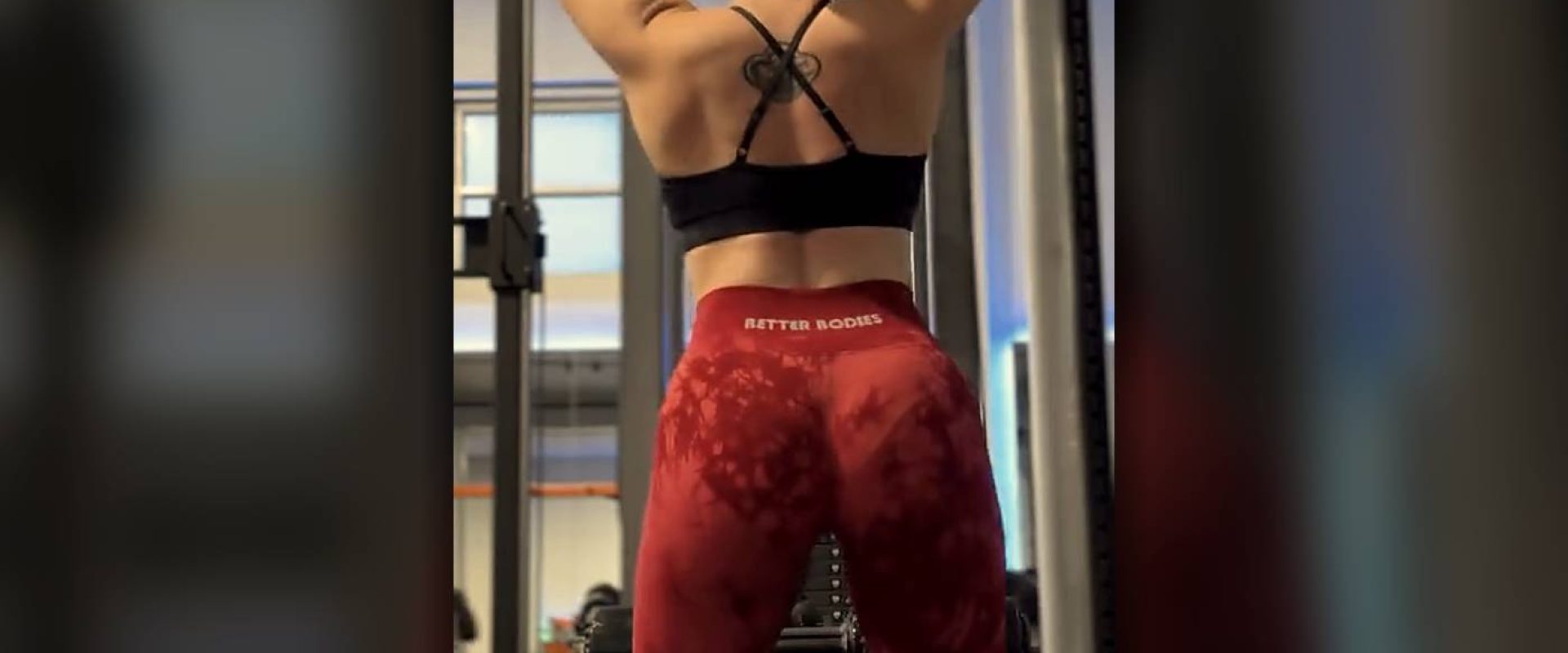
Women may be getting more from strength training than we realized
For decades the default advice for women was more cardio. A 412,413-adult mortality study, a supervised bone-density trial and a meta-analysis on machines versus free weights now point somewhere else. Here is what each one found, what it does not prove, and what it means on our floor.

01The cardio default
Walk into most gyms and you can still see the old split. The cardio deck on one side, the strength floor on the other, and a lot of women told for years that their place was the first one. Strength training got framed as optional, aesthetic, or something you added once the real exercise was done.
The research has moved past that. Strength training is not mainly about how you look. It is linked with how long you live, how well your skeleton holds up with age, and how capable you stay.
Research Canada’s 24-Hour Movement Guidelines for adults aged 18 to 64 call for at least 150 minutes of moderate-to-vigorous aerobic activity per week, plus muscle-strengthening activities using the major muscle groups at least twice a week.
Our interpretation Most people treat that second part as optional. The rest of this article explains why it is not, and why some of the strongest signals show up in women.
02412,413 adults tracked. Then the numbers got interesting.
Research Researchers led by Hongwei Ji analyzed 412,413 U.S. adults from the National Health Interview Survey, who self-reported their physical activity between 1997 and 2019. Over the follow-up, 39,935 participants died, 11,670 of them from cardiovascular causes. Every result was split by sex.
For muscle-strengthening activity, the gap between women and men was hard to miss.
| Women | Men | Outcome |
|---|---|---|
| 30% | 11% | Lower cardiovascular mortality risk Regular muscle-strengthening activity compared with none |
| 19% | 11% | Lower all-cause mortality risk Same comparison, deaths from any cause |
| ~20% | ~28% | Share doing regular strength work Fewer women lifted, and the association was still larger in women |
Source: Ji H, et al. Journal of the American College of Cardiology, 2024. Associations from observational data.
Research The same study found the pattern held for aerobic exercise too: women reached a given reduction in risk with less weekly activity than men needed.

03What the JACC study does not tell you
A headline number is only useful when you know its limits. Here are the limits of this one.
- It shows association, not cause. Regular muscle-strengthening activity was associated with lower mortality risk. The study cannot prove that lifting caused that drop.
- It does not guarantee an individual outcome. These are population-level risk comparisons.
- Activity was self-reported. Participants described their own habits in a survey.
- It measured frequency, not dose. Strength training was recorded by how often people did it, not for how long or how heavy.
04Then came the bone question
Bone loss becomes a bigger issue for women with age, particularly after menopause. For a long time, the cautious advice for women with low bone mass was to keep exercise light. The LIFTMOR trial, run by Steven Watson, Belinda Beck and colleagues in Australia, tested the opposite.
Research The trial randomized 101 postmenopausal women with low to very low bone mass, average age 65. Every participant was screened before entry. One group did supervised high-intensity resistance and impact training. The control group followed a low-intensity, unsupervised home program built for balance and mobility rather than bone.
| Value | Protocol element | Detail |
|---|---|---|
| 2× | Sessions per week | Small groups, supervised by exercise scientists and physiotherapists |
| 30 | Minutes per session | Brief by design |
| 8 | Months | First month used body weight and low-load versions before the heavy work began |
| 5×5 | Deadlift, back squat, overhead press | Above 85% of one-rep maximum once progressed |
| + | Impact | Jumping chin-ups with drop landings |
Source: Watson SL, et al. Journal of Bone and Mineral Research, 2018.
05Their bones responded to load
Research After eight months, the control group lost bone at both measured sites. The training group gained at the spine and held its ground at the hip.
| Training | Control | Bone mineral density, 8 months |
|---|---|---|
| +2.9% | −1.2% | Lumbar spine |
| +0.3% | −1.9% | Femoral neck (hip) |
Source: Watson SL, et al. Journal of Bone and Mineral Research, 2018. The trial also reported better scores on every functional performance test.


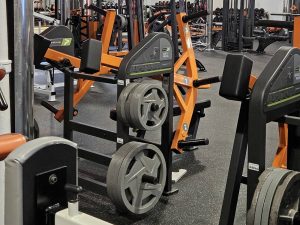
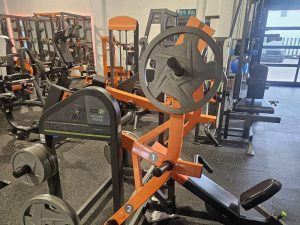
Heavy, progressed strength work on the Brickhouse floor. On our floor
Our interpretation LIFTMOR was not a do-it-yourself program. Participants were screened, supervised at every session and progressed over a month before the heavy work. The takeaway is not that every woman should attempt heavy 5×5 work tomorrow. It is that appropriately progressed resistance training can produce meaningful bone-related benefits. If you have osteoporosis, osteopenia or a history of fracture, talk to your physician first and get qualified supervision.
06Machines are not the “soft” option
One of the biggest barriers for women starting strength training is the idea that machines do not count. That real lifting means a barbell, and anything with a pin and a weight stack is a compromise.
Research Haugen and colleagues tested that idea with a systematic review and meta-analysis of 13 studies and 1,016 adults aged 18 to 60, each comparing free-weight training with machine-based training for at least six weeks.
- Muscle growth: no difference. Machines and free weights produced similar hypertrophy.
- Strength follows the tool. Free-weight training produced bigger gains on free-weight strength tests. Machine training tended to produce bigger gains on machine tests.
- Head-to-head: no difference. In the direct comparison of strength, jump performance and muscle growth, the review found no differences between the two.
This diagram shows the principle the review describes, not measured effect sizes. Our interpretation
Our interpretation That does not make machines superior, and it does not make free weights obsolete. It makes machines legitimate. The best tool is the one that lets you train hard, progressively, consistently and safely. For many people, especially early on, that is a well-built machine.

07What the research does not tell you
- The machine review is light on women. Only five of the 13 studies measured muscle growth, and women made up 219 of the 1,016 participants.
- The review covered adults aged 18 to 60. It does not speak directly to older lifters.
- LIFTMOR studied one specific group. Screened postmenopausal women with low bone mass, under professional supervision. Its results do not transfer automatically to unsupervised training.
- No study here tested a specific gym. Nothing in this research measured Brickhouse equipment or any other brand.
08What this means for your training
Put the three studies together and a clear picture forms. You do not need a perfect program. You need a consistent one that you progress over time. Our interpretation
- Lift at least twice a week. That matches Canada’s adult guidelines and the LIFTMOR schedule. Two focused sessions beat five scattered ones.
- Train the big movement patterns. Squat, hinge, push and pull, using the major muscle groups. Machines, free weights or both all count.
- Progress the load. When you can complete every rep with clean form, add a little weight or a rep next time.
- Earn the heavy work. Heavy loading is where the bone data lives, and it is where technique matters most. Build up to it, and get qualified help if you have low bone mass or an injury history.
- Keep the cardio. Strength training adds to aerobic exercise. It does not replace it.
Want a ready-made structure? Our 4-day upper/lower split for women covers all of the above, with every exercise filmed on the Brickhouse floor.
General education for healthy adults, not medical advice. If you are pregnant or postpartum, managing a health condition, or have low bone mass or a history of fracture, check with a qualified professional before starting or changing a program.
09The Brickhouse perspective
If machines are a legitimate way to build muscle, then the quality of the machine matters: the resistance curve, the adjustability, the way it loads the muscle you came to train. That is why we do not fill the floor with random machines. We curate serious tools from Prime Fitness, Arsenal Strength and GluteBuilder, alongside racks, platforms and barbells. See the full floor.
You do not need to know every machine before you walk in. Built for the 1% has nothing to do with experience level. It is a mindset. If you are not sure where to start, One Hour on the House is a complimentary hour to get comfortable in the environment and learn the equipment. If you would rather experience it on your own, start with the pass below.
One-Week Full Access Pass
Seven consecutive days of 24/7 access to Brickhouse Gym, including the Prime Fitness, Arsenal Strength and GluteBuilder machines and the barbell platforms. $45.99 plus tax, one per person. Commit within 7 days after your pass ends and the full $45.99 pass price is credited toward your membership. Taxes are not credited.
Get the passSources
Peer-reviewed / primary
- Ji H, Gulati M, Huang TY, et al. Sex Differences in Association of Physical Activity With All-Cause and Cardiovascular Mortality. Journal of the American College of Cardiology, 2024;83(8):783–793 (sections 02 and 03)
- Watson SL, Weeks BK, Weis LJ, Harding AT, Horan SA, Beck BR. High-Intensity Resistance and Impact Training Improves Bone Mineral Density and Physical Function in Postmenopausal Women With Osteopenia and Osteoporosis: The LIFTMOR Randomized Controlled Trial. Journal of Bone and Mineral Research, 2018;33(2):211–220 (sections 04 and 05)
- Haugen ME, Vårvik FT, Larsen S, Haugen AS, van den Tillaar R, Bjørnsen T. Effect of free-weight vs. machine-based strength training on maximal strength, hypertrophy and jump performance: a systematic review and meta-analysis. BMC Sports Science, Medicine and Rehabilitation, 2023;15:103 (sections 06 and 07)