8 dirty muscle secrets most lifters learn too late
Eight rules you hear on every gym floor, checked against the published research and rewritten as standards you can run in your next session. More hours won’t build more muscle. Better hours will.

Most lifters don’t have a time problem. They have a standard problem. Sets that stop the moment they get uncomfortable. Rest periods that turn into scroll sessions. A sixth training day added because the fifth didn’t seem to be working. Volume stacked on volume, and nothing new in the mirror.
The gym is full of rules that sound right and quietly waste your effort. Some came from magazines. Some got passed from one training partner to the next until nobody remembered where they started. A few hold a piece of truth wrapped in a bad prescription.
We took eight of the most common ones and checked each against the research: systematic reviews, meta-analyses and sports nutrition position stands. Some held up. Some needed a hard rewrite. All eight come out as a standard you can use the next time you walk onto the floor.
None of this is about doing less. It’s about doing the work that counts. That is what Built for the 1% means at Brickhouse Gym: not genetics, not status, but standards.
015 g of creatine isn’t everyone’s ceiling
The rule you’ve heard: take 10 g of creatine, not 5 g.
The answer depends on who is taking it. Research The International Society of Sports Nutrition’s position stand on creatine puts the standard maintenance dose at 3 to 5 g a day once muscle stores are full, and notes that larger athletes in intense training may need 5 to 10 g a day to keep those stores topped up. The same paper describes two ways to fill the stores: a loading phase of about 0.3 g per kilogram of body weight a day for five to seven days, or a steady 3 to 5 g a day that raises muscle creatine over three to four weeks.
Our interpretation Creatine works by filling your muscle’s creatine stores. The goal is to keep them full, not to overflow them. Doubling the scoop doesn’t double the muscle. Body size and training load decide where you land. A 75 kg lifter training four days a week fits the standard range. A 115 kg lifter training hard five or six days a week is the profile the higher range describes.
| Lifter | Daily maintenance | What the position stand says |
|---|---|---|
| 01 | Most lifters, stores full 3 to 5 g a day | Enough to maintain elevated muscle creatine for the general training population. |
| 02 | Larger athletes in intense training 5 to 10 g a day | Some studies indicate larger athletes may need this much to maintain their stores. It is a maintenance figure, not a bigger-muscle figure. |
Source: International Society of Sports Nutrition position stand on creatine (Kreider et al., 2017). Talk to a health professional before adding any supplement if you have a medical condition.
The standard: dose for your size and stay consistent. More isn’t automatically more muscle.
02Two great sets beat four lazy ones
The rule you’ve heard: do 2 sets per exercise, not 3 or 4.
Half right, and the other half matters. Research A 2017 meta-analysis found a graded dose-response between weekly sets and muscle growth: more sets, more muscle. A 2026 meta-regression across 67 studies and 2,058 participants confirmed the relationship and showed diminishing returns, with each added set contributing less than the one before it. The same analysis found the diminishing returns for strength considerably more pronounced than for size.
So more sets aren’t useless. The catch is that a set only counts if it’s a working set. Our interpretation Research on proximity to failure, covered in Secret 03, shows that sets ending far short of failure do less for growth. Four sets that stop when they get uncomfortable can deliver less than two that finish hard, controlled and heavier than last week.
The shape is the finding; the numbers are not. Each added hard set adds muscle, with smaller returns as the weekly total climbs. Sets that stop far from failure count for less. Our interpretation
Research A review of time-efficient training suggests a floor of at least 4 weekly sets per muscle group, using sets in the 6 to 15 repetition maximum range, when time is the limiting factor. Two great sets per exercise, spread across two sessions or two movements, gets you there.

The standard: make every set count first. Then build your weekly total.
03Stop quitting when the set gets hard
The rule you’ve heard: train close to failure on every set.
This one holds up, with one correction. Research A 2024 series of meta-regressions found that muscle growth improves as sets are terminated closer to failure, while strength gains were similar across a wide range of reps in reserve. The authors estimated reps in reserve from how each study described its training, and they call the analysis exploratory.
The correction: close to failure is not the same as failure. Research A 2023 systematic review with meta-analysis found no evidence that training to momentary muscular failure builds more muscle than stopping short of it.
Our interpretation The practical tool is reps in reserve, or RIR: the number of clean reps you could still do when you rack the weight. Most working sets should end at 1 to 3 RIR. That’s where the work counts. Grinding every set of squats or presses to total failure costs more recovery and invites your form to break down, with no added growth to show for it.
Most working sets end in the orange cells. Zero is a tool for the last set of an isolation movement, not a daily destination for squats and presses. Our interpretation
How to know how many reps you had left
- Watch bar speed. When the last rep moves clearly slower than the first, you are inside 3 RIR.
- Film a set once a week. Lifters routinely overestimate how close they are to failure until they see it.
- Take one set per session to 0 RIR on an isolation movement, where a failed rep costs nothing, so you learn what failure feels like.
The standard: end working sets 1 to 3 reps short of technical failure. Form stays clean.
04Seven days isn’t a badge of honour
The rule you’ve heard: train 5 days a week at most, never 6 or 7.
There’s no hard ceiling, and there’s no bonus for extra days either. Research A 2019 meta-analysis on training frequency found no significant difference in muscle growth between higher and lower frequencies when weekly volume was equated. The 2026 meta-regression from Secret 02 reached a similar conclusion for muscle size, describing the frequency effect as compatible with negligible, while strength did rise with more frequent training, again with diminishing returns.
Our interpretation In plain terms, a sixth or seventh day doesn’t build muscle on its own. It either spreads the same work thinner or adds work you have to recover from. Muscle adapts when training stress meets real recovery: sleep, food and time. Three to five well-built sessions a week can take you a long way. Six or seven can work for experienced lifters who manage volume, intensity and recovery. The limit is your recovery, not the calendar.
| Day | Session | Why it sits there |
|---|---|---|
| Mon | Upper body, heavy | Freshest day of the week goes to the heaviest pressing and rowing. |
| Tue | Lower body, heavy | Squat pattern, hinge pattern, then isolation work. |
| Wed | Recover | Walk, eat, sleep. The adaptation from Monday and Tuesday happens here. |
| Thu | Upper body, volume | Moderate loads, more sets, every one pushed to 1 to 3 RIR. |
| Fri | Lower body, volume | Leg press, hack squat and leg curls carry the volume without the spinal load. |
| Sat | Recover | Two full days off before the next heavy upper session. |
| Sun | Recover | If Monday’s numbers keep climbing, the week is working. |
An example week, not a prescription. Four sessions, three recovery days, each muscle trained twice. Our interpretation

The standard: add a training day only when you can recover from it. Recovery is part of the program.
0590 minutes. Make them count.
The rule you’ve heard: keep workouts under 90 minutes.
It’s a good planning rule, not physiology. We found no research that sets a cutoff at 90 minutes. Muscle doesn’t stop growing at minute 91. Our interpretation The real problem with long sessions is what fills them: wandering between stations, scrolling, chatting, and redundant sets that repeat work you already did.
Research The time-efficient training review found that supersets, drop sets and rest-pause sets can roughly halve session time while maintaining training volume, though the authors note these methods appear better suited to muscle size than to maximal strength. The same review recommends limiting warm-ups to movements specific to the lifts you are about to do, and stretching only when flexibility is the goal.
How to build a 60 to 75 minute session
- Write it before you walk in. Exercises, sets, target loads and the rest you plan to take. Deciding at the rack is where minutes disappear.
- Lead with the heaviest lift. Your biggest compound or plate-loaded movement goes first, while you are fresh and the floor is quiet.
- Pair the isolation work. Superset a push with a pull, or a quad movement with a hamstring movement, so one muscle rests while the other works.
- Run a rest timer. Two minutes means two minutes. Secret 07 covers how long.
- Log the session and leave. If every planned set is done and the log shows progress, the session is over, whatever the clock says.

The standard: walk in with a plan. 45 to 90 focused minutes covers most lifters.
065 to 8 reps is serious work
The rule you’ve heard: lift heavy for 5 to 8 reps, not 12 to 15.
Half true. Research A 2021 systematic review with network meta-analysis compared low, moderate and high training loads and found no differences in muscle growth between them, while strength gains were greater with high and moderate loads than with low loads. The authors conclude that muscle growth appears load independent and that strength gains favour heavier loads.
Our interpretation So 12 to 15 reps build muscle too, as long as those sets are pushed close to failure. High reps aren’t a lesser form of training. They’re a different tool. The heavy range still earns its place. Getting stronger at 5 to 8 reps gives you more load to work with in every other rep range, and it builds the confidence to handle real weight with control.
| Reps | Load | What the research supports | Where we use it |
|---|---|---|---|
| 5‑8 | Heavy | Muscle growth on par with lighter loads; the strongest strength gains. | Big compound lifts and plate-loaded machines built to be loaded heavy: the Prime and Arsenal Strength pieces. |
| 8‑12 | Moderate | Muscle growth on par with other ranges; strength gains close to the heavy range. | Most pressing, rowing and leg machine work. |
| 12‑15+ | Light | Muscle growth on par with heavier loads when sets are taken close to failure; smaller strength gains. | Isolation work where heavy loads beat up elbows and shoulders: laterals, curls, extensions, calves. |
Research column: Lopez et al., 2021. “Where we use it” is our programming, not a study finding. Our interpretation

Whatever the range, the rep has to be real: full range of motion, a controlled lowering, no bouncing.
The standard: own the heavy range on your big lifts. Full range, controlled reps, every time.
07Control your rest. Keep your standard.
The rule you’ve heard: keep the intensity up and keep your rests short.
The first half is right; the second half needs work. Our interpretation Intensity isn’t speed. It’s effort, execution and progression: hard sets, clean reps and more weight or reps over time. Rushing your rest works against all three.
Research A 2024 systematic review with Bayesian meta-analysis found that inter-set rest longer than 60 seconds may offer a small benefit for muscle growth, and detected no appreciable difference in growth once rests passed 90 seconds. An eight-week study of 21 resistance-trained men found that 3-minute rests produced greater gains in squat and bench press strength, and greater anterior thigh muscle thickness, than 1-minute rests.
Our interpretation The logic is simple. Cut your rest too short and the next set loses reps or load. Rest long enough to repeat a quality set, and every set does its job.
| Minutes | Exercise type | Why |
|---|---|---|
| 1‑2 | Isolation work Laterals, curls, extensions, calves | Small muscles recover quickly and the loads are light. Past 90 seconds the research shows little added growth. |
| 2 | Machine compounds Leg press, hack squat, chest press, rows | Enough to repeat the load and reps on a stable machine. |
| 2‑3+ | Heavy free-weight compounds Squats, deadlifts, presses, barbell rows | The 3-minute group out-gained the 1-minute group on these lifts. Take the time. |
A working guide for most lifters. The research measured 1 versus 3 minutes and rests above or below 60 and 90 seconds, not every value in between. Our interpretation
Bonus: if your phone time exceeds your set time, fix that
Your phone isn’t the enemy. A rest timer, a training log and your music all live on it. The problem is the 2-minute rest that turns into 6 minutes of scrolling while your working weight sits loaded on the machine.
The research here is thin, and we won’t pretend otherwise. Research One 2023 crossover study of 21 resistance-trained men found that using social media before training slowed bar speed on the first set of bench press, though it did not reduce the number of reps. No study has tested scrolling between sets. Our interpretation This one isn’t about physiology. It’s about time and focus. Open the timer, log the set, put the phone away. On our floor At Brickhouse your music stays in your headphones; phone speakers are not used on the floor.

The standard: run a rest timer. Start the next set ready, not rushed.
08Protein builds. Carbs fuel.
The rule you’ve heard: carbs are as important as protein.
Overstated, but pointing at something real. Our interpretation Protein and carbs aren’t interchangeable. They do different jobs, and serious lifters need both.
Research Protein supplies the building blocks for repair and growth. The International Society of Sports Nutrition’s position stand on protein states that a daily intake of 1.4 to 2.0 g per kilogram of body weight is sufficient for most exercising individuals to build and maintain muscle. For a 90 kg lifter, that’s roughly 126 to 180 g a day.
Research Carbs fuel hard sessions and refill muscle glycogen, the stored energy your muscles burn through during hard sets. The joint position of the Academy of Nutrition and Dietetics, Dietitians of Canada and the American College of Sports Medicine scales carbohydrate intake with daily training load, from 3 to 5 g per kilogram for light training up to 8 to 12 g per kilogram for the most demanding schedules.
| Nutrient | Job | Daily guide | Source |
|---|---|---|---|
| P | Protein Repair and growth | 1.4 to 2.0 g per kg of body weight | ISSN position stand on protein and exercise (2017) |
| C | Carbohydrate Training fuel, glycogen | 3 to 5 g per kg for light training; 5 to 7 g for moderate; 6 to 10 g for high; 8 to 12 g for very high loads | Joint position on nutrition and athletic performance (2016) |
Most lifters doing 45 to 90 minutes of resistance training a day sit in the light to moderate carbohydrate bands. The upper bands describe endurance athletes and multi-hour training days. Our interpretation
There’s a nuance worth knowing. Research A 2022 systematic review found that in a fed state, in workouts of up to 10 sets per muscle group, carbohydrate intake is unlikely to affect strength training performance. Benefits showed up mainly against fasted controls and in higher-volume sessions. Our interpretation So carbs won’t rescue a bad program, but cutting them to the bone makes long, hard sessions harder to sustain. Total intake matters most. Under-eat, and you’ll struggle to train hard and recover, no matter how your macros are split.
The standard: eat enough total food, protein and carbs to train hard and recover.
09What the research does not tell you
Every claim above comes from a meta-analysis, a systematic review or a position stand, and each one measured something specific. Here is what none of them measured. Our interpretation
- No study sets a 90-minute cutoff. The session-length rule is a planning tool. Nothing in the research shows muscle growth switching off at any clock time.
- No study has tested phone use between sets. The one trial on social media looked at use before training, in one exercise, in 21 trained men.
- Reps in reserve were estimated, not measured. The proximity-to-failure analysis inferred RIR from how studies described their training. Its authors call it exploratory.
- “Three to five sessions a week” is our reading, not a finding. The research shows frequency matters little once weekly volume is matched. The number of days you train is a recovery and schedule decision.
- Averages are not individuals. Meta-analyses pool hundreds of people into one curve. Your response to volume, frequency and creatine sits somewhere on that curve, and only your training log can tell you where.
- Most studies run for weeks, not years. Training interventions typically last 6 to 12 weeks. How these principles play out over a decade of lifting is a question the research has not answered.
10Environment shapes performance
Read the eight secrets again and you’ll notice none of them says “do less.” Each one says make the work count: hard sets, enough recovery, a plan, the right fuel. That is what Built for the 1% means at Brickhouse. It isn’t about genetics, status or how many hours you log. It’s about refusing to waste the hour you showed up for.
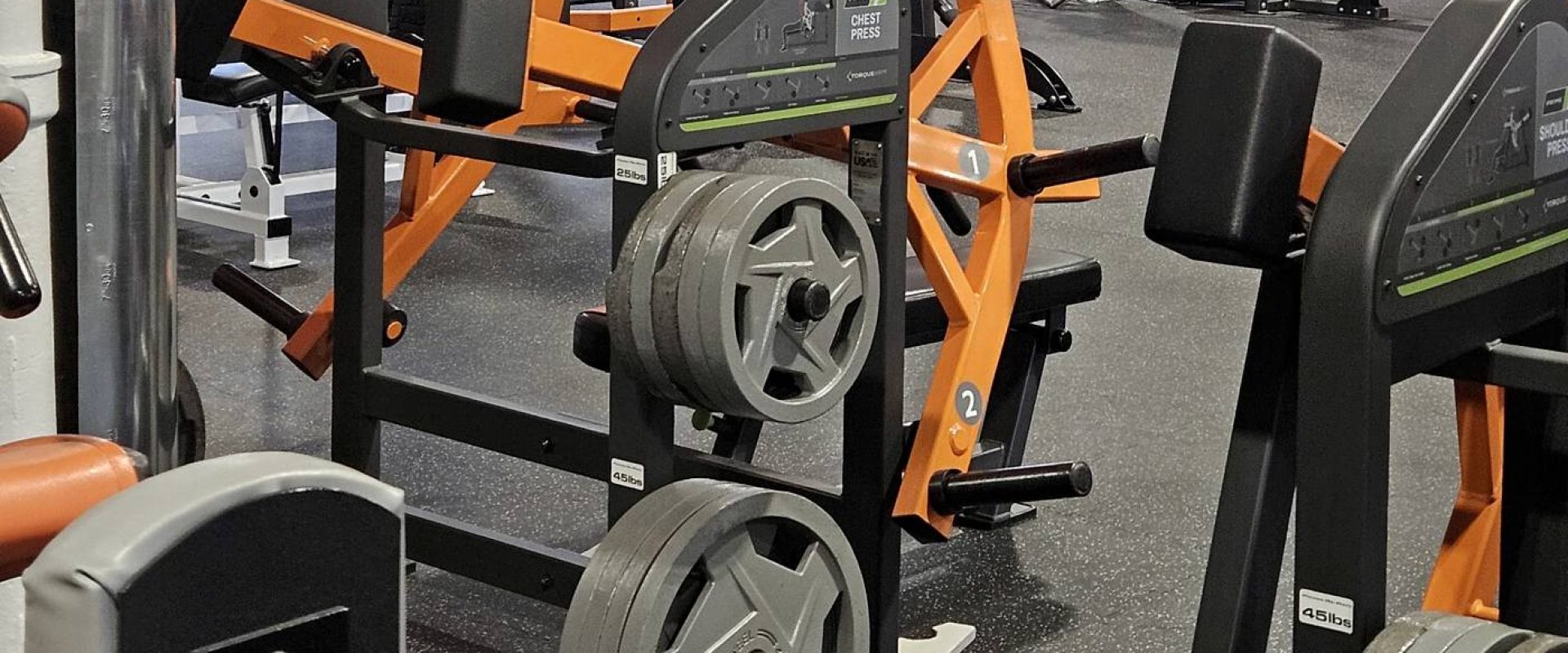
Our interpretation Standards are easier to keep in a room that expects them. A rest timer is easier to honour when nobody is waiting on your machine. A heavy set of 5 is easier to commit to on a plate-loaded press that stays planted when the plates stack up. A 60-minute session is easier to finish when the leg equipment sits in one zone instead of four corners of the building.
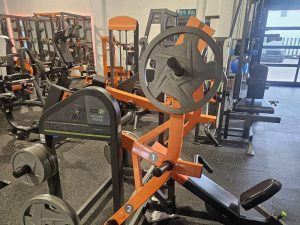
On our floor Brickhouse Gym is a 12,000 sq ft training environment at 1301 Osler St in Regina, built around Prime Fitness and Arsenal Strength strength equipment, laid out in zones by muscle group, open 24/7 with self-serve app access, and run on limited memberships so the floor stays focused. Headphones only. Plates go back on the tree. Equipment gets wiped down. It’s built for people who train with intent.


The environment is the product. The eight standards above are easier to keep inside it. On our floor
One-Week Full Access Pass
Seven consecutive days of 24/7 access to Brickhouse Gym, with self-serve entry through the app, so you can run these eight standards on the Prime Fitness and Arsenal Strength floor they were written for. $45.99 plus tax, one pass per person, valid ID and approval required. Commit within 7 days after your pass ends and the full $45.99 is credited toward your membership.
Get the passSources
Research / primary
- Kreider RB, et al. International Society of Sports Nutrition position stand: safety and efficacy of creatine supplementation in exercise, sport, and medicine. J Int Soc Sports Nutr. 2017;14:18. (Secret 01)
- Schoenfeld BJ, Ogborn D, Krieger JW. Dose-response relationship between weekly resistance training volume and increases in muscle mass: a systematic review and meta-analysis. J Sports Sci. 2017;35(11):1073-1082. (Secret 02)
- Pelland JC, Remmert JF, Robinson ZP, Hinson SR, Zourdos MC. The resistance training dose response: meta-regressions exploring the effects of weekly volume and frequency on muscle hypertrophy and strength gains. Sports Med. 2026;56(2):481-505. (Secrets 02 and 04)
- Iversen VM, Norum M, Schoenfeld BJ, Fimland MS. No time to lift? Designing time-efficient training programs for strength and hypertrophy: a narrative review. Sports Med. 2021;51(10):2079-2095. (Secrets 02 and 05)
- Robinson ZP, Pelland JC, Remmert JF, Refalo MC, Jukic I, Steele J, Zourdos MC. Exploring the dose-response relationship between estimated resistance training proximity to failure, strength gain, and muscle hypertrophy: a series of meta-regressions. Sports Med. 2024;54(9):2209-2231. (Secret 03)
- Refalo MC, Helms ER, Trexler ET, Hamilton DL, Fyfe JJ. Influence of resistance training proximity-to-failure on skeletal muscle hypertrophy: a systematic review with meta-analysis. Sports Med. 2023;53(3):649-665. (Secret 03)
- Schoenfeld BJ, Grgic J, Krieger J. How many times per week should a muscle be trained to maximize muscle hypertrophy? A systematic review and meta-analysis. J Sports Sci. 2019;37(11):1286-1295. (Secret 04)
- Lopez P, Radaelli R, Taaffe DR, et al. Resistance training load effects on muscle hypertrophy and strength gain: systematic review and network meta-analysis. Med Sci Sports Exerc. 2021;53(6):1206-1216. (Secret 06)
- Singer A, Wolf M, Generoso L, et al. Give it a rest: a systematic review with Bayesian meta-analysis on the effect of inter-set rest interval duration on muscle hypertrophy. Front Sports Act Living. 2024;6:1429789. (Secret 07)
- Schoenfeld BJ, Pope ZK, Benik FM, et al. Longer interset rest periods enhance muscle strength and hypertrophy in resistance-trained men. J Strength Cond Res. 2016;30(7):1805-1812. (Secret 07)
- Alix-Fages C, González-Cano H, Baz-Valle E, Balsalobre-Fernández C. Effects of mental fatigue induced by Stroop task and by social media use on resistance training performance, movement velocity, perceived exertion, and repetitions in reserve. Motor Control. 2023;27(3):645-659. (Bonus)
- Jäger R, Kerksick CM, Campbell BI, et al. International Society of Sports Nutrition position stand: protein and exercise. J Int Soc Sports Nutr. 2017;14:20. (Secret 08)
- Thomas DT, Erdman KA, Burke LM. Nutrition and athletic performance. Joint position of the Academy of Nutrition and Dietetics, Dietitians of Canada and the American College of Sports Medicine. Med Sci Sports Exerc. 2016;48(3):543-568. (Secret 08)
- Henselmans M, Bjørnsen T, Hedderman R, Vårvik FT. The effect of carbohydrate intake on strength and resistance training performance: a systematic review. Nutrients. 2022;14(4):856. (Secret 08)
Brickhouse documents
- Brickhouse Gym Entry Offer Strategy, Official Standard (2026): One-Week Full Access Pass terms and credit policy.
This article is general education for healthy adults, not medical or nutrition advice. Talk to a qualified health professional before changing your diet, supplement use or training if you have a medical condition.